Most fire safety plans we write are built around the fire alarm panel: where it is, what sets it off, how to silence it and how to reset it. This one couldn’t be. The two industrial units a kitchen-cabinet manufacturer occupies on 78th Avenue in Newton have no fire alarm system, no sprinklers and no smoke detectors. When something goes wrong, the alarm is an air horn.
The building went up in 1988 and the tenant works with what is there. So the plan had to do the job that, in most buildings, the equipment does.
The building
Two side-by-side units in a one-storey concrete building with a mezzanine and a flat membrane roof. The plan covers the cabinet shop’s two units, not the whole building.
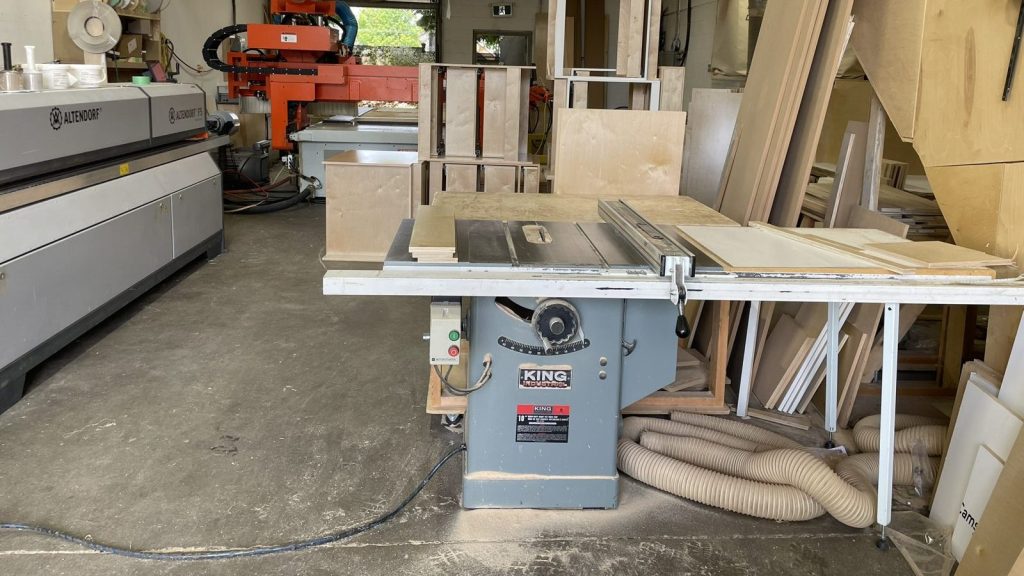
The main floor holds the office, washrooms and the workshop: a CNC machine, an edge-banding machine, a door drill, sanders, a table saw, and hardwood stock on racking 16 feet high. The mezzanine holds the paint booth, the finish storage and the staff lunch room. Each unit has a single exit door on the south side, another on the north side, and two overhead doors.
There is no roof access from inside the units, and the main electrical shut-off is not in the units at all. It is in the base building’s electrical room in the northeast corner, which is exactly the kind of detail a crew needs before they arrive, not after.
When the alarm is a person
With no panel and no monitoring company, nothing calls the fire department on its own. Nothing detects a fire either. The plan is written around that. The Fire Safety Director’s emergency duties start “at the sound of an alarm or air horn,” and every drill begins with one person sounding the horn and another making the 911 call, because if nobody makes it, nobody will.
It also shifts the weight onto prevention. In a sprinklered building, a fire that starts after hours gets controlled. Here, the daily inspection checklist and the end-of-day housekeeping are most of the protection the building has.
Two hazards, two standards
A cabinet shop combines two things fire codes treat seriously, and the plan brings in the standard written for each.
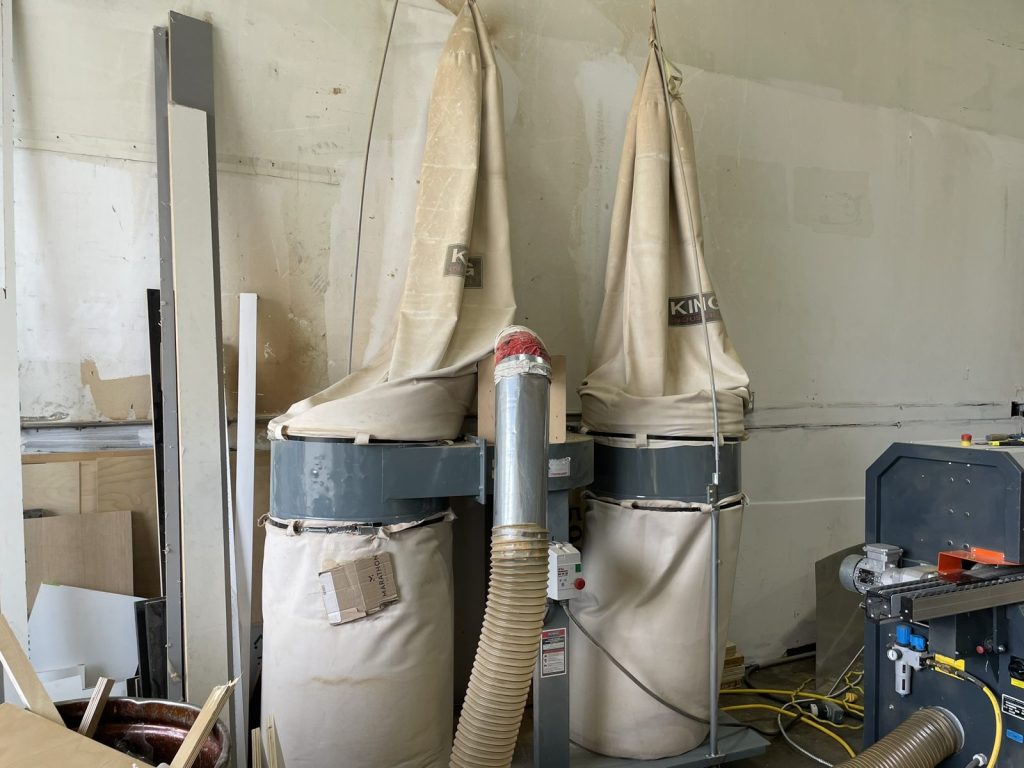
Wood dust (NFPA 664). Fine hardwood dust burns fast and, suspended in air, can explode. The plan holds the shop to these limits:
- no more than 3.2 mm (1/8 inch) of dust on any surface, including roof joists and other high ledges nobody looks at
- compressed air used for cleaning only with every machine de-energized and every ignition source removed
- any dust collector without an enclosure kept at least 6.1 m (20 feet) from exits, occupied areas and other collectors
- equipment grounded, bonded and interlocked
- spark-producing machines kept off the woodworking dust system
The collectors in both units start automatically with the machines. The shop had been emptying the collection bins every week and a half to two weeks; the plan sets the standard at daily.
Spray finishing (NFPA 33). The paint booth on the mezzanine exhausts to the outside. Stains, thinners, reducers and catalysts are kept in storage cabinets on the mezzanine, with a 600-litre limit written into the plan. Every storage location is marked on the drawings.
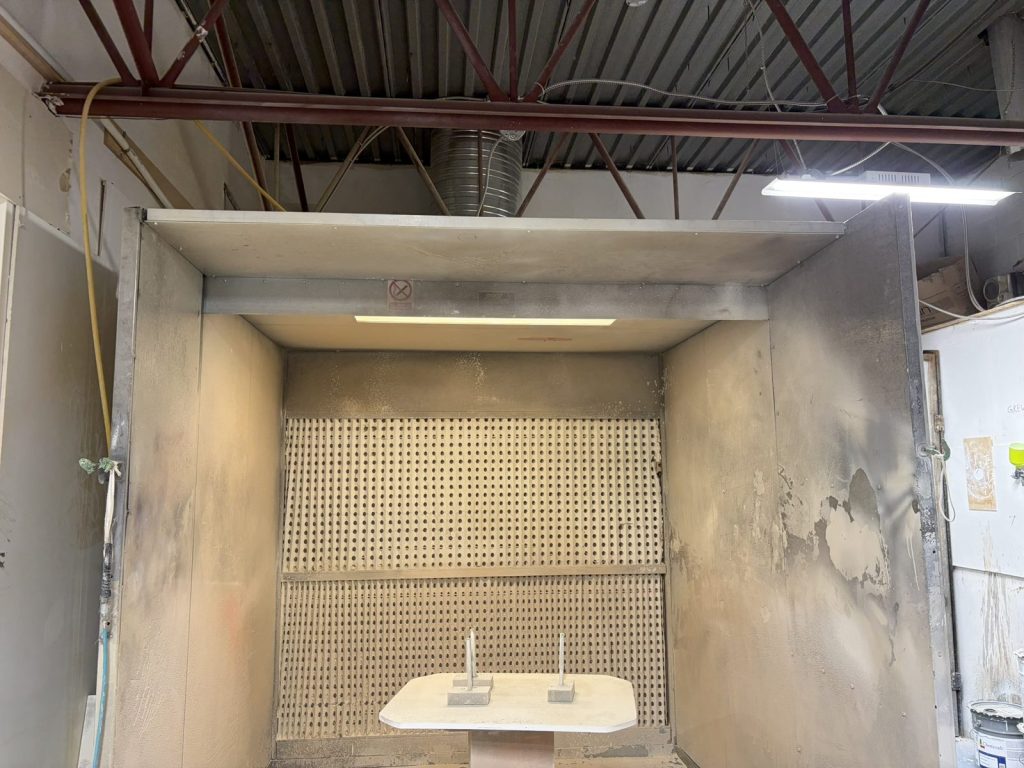
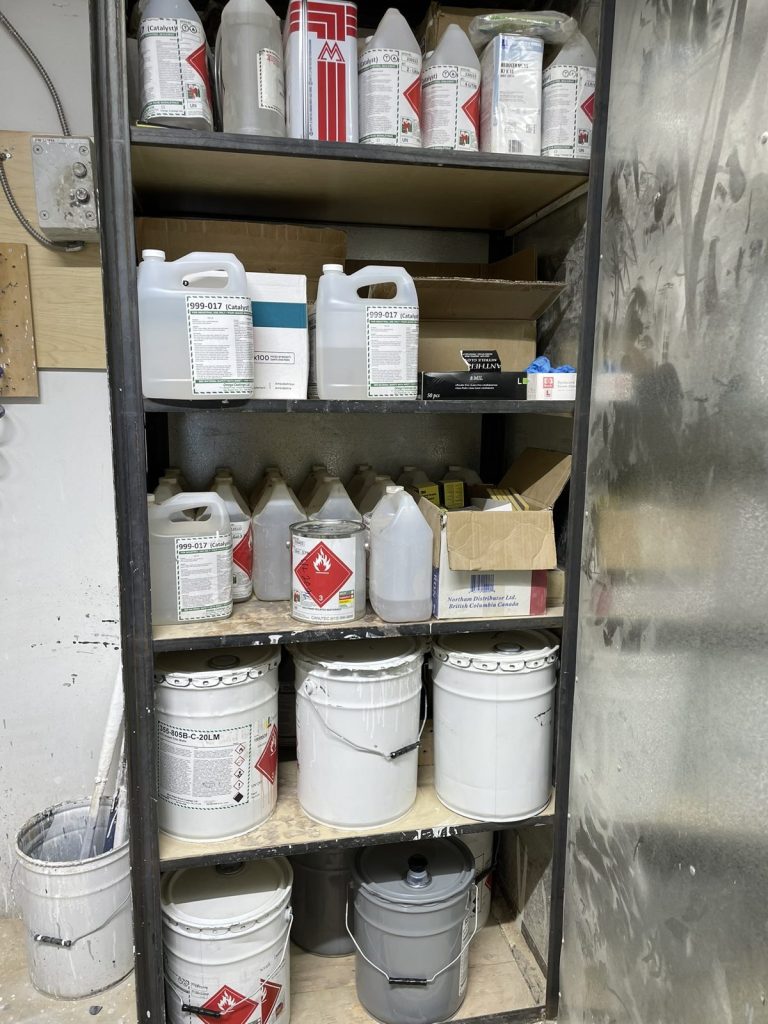
The mezzanine is open to the shop floor below, so the finishing area and the dust-producing machines are separated by distance and nothing else. That is why the plan treats them as one problem.
What the drawings carry
In an unsprinklered building the drawings have to tell the fire department where the fuel is before anyone opens an overhead door. The site plan and the two floor plans show every exit and overhead door, the extinguishers, electrical panels and shut-offs, the water shut-offs in each unit’s washroom, the gas shut-off on the south side, the dust collector, the paint booth, the compressor, the 16-foot racking and each hazardous-materials location. The plan went in with Surrey’s Vital Building Information form.
If you run a shop with dust, finishes or racking, our guide to fire safety plans for warehouses and industrial buildings covers the rest, and the Surrey page covers how Surrey Fire Service reviews plans.
Need a fire safety plan approved?
Firm quote within one business day. Approval guaranteed.